Wait, Do We Still Need Network Engineers? And a Little SRv6
2026-09-12
Fact number one: I wanted to write a small note about SRv6. Not even about SRv6 as a protocol, really, but about the road the industry travelled from plain old LDP to a world where an IPv6 address can be both a destination and an instruction.
Disclaimer #1
Before going any further, open Two Labels, One SRH, and One Very Annoying
rp_filterand skim it for five minutes. That article is the polished technical result I originally wanted.
Two Labels, One SRH, and One Very Annoying rp_filter: How a Linux Network Made It from IP to SRv6 L3VPN
2026-09-08
Spoiler: this is not about stuffing more words like
mpls,segment-routing, andsrv6into a config. It is about stopping after every one of those words and asking: where did the packet actually go?
We had ten Linux machines connected by virtual links, plus a separate management network. At the beginning, this was not an “MPLS lab”: there was no IPv4 data plane, FRR was missing on some nodes, and the neighbors shared little more than interfaces and a healthy amount of mutual suspicion.
Kubernetes for the Cool Kids (Who Route Packets)
2025-08-22
From a network engineer to network engineers. No bullshit.
The Lab Setup
Alright, folks. We’re about to simulate a “baremetal” Kubernetes cluster. And by “baremetal,” I of course mean an Ubuntu VM running inside a hypervisor that’s itself virtualized. You get the idea. Here’s the master plan:
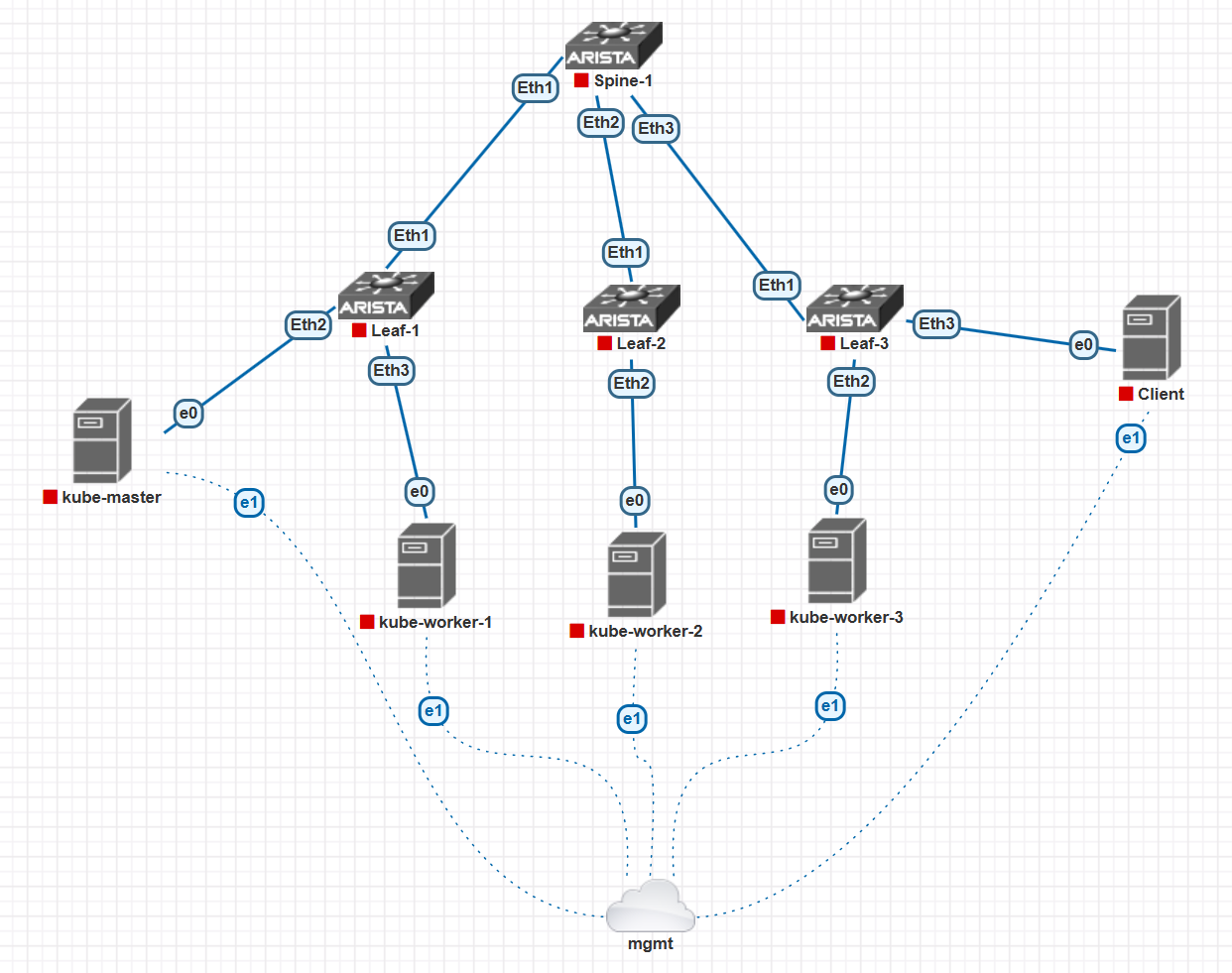
Now, because we’re doing this the right way:
-
We’ll emulate the whole thing right in PNETLAB.
-
We’re using a Leaf-Spine topology. Standard.